One team for FBA prep and Amazon growth, from the pallet to the Buy Box.
Most sellers buy Amazon growth from an agency and FBA prep from a warehouse. Neither one owns the seam between them. We run both halves.
- The floor — inbound counts, inspection, FNSKU, poly bags, bundles, cartons, shipment plans.
- The account — listings, backend keywords, A+ content, Sponsored campaigns, stock cover.
- One thread — one point of contact, one invoice, one team to answer when something breaks.
One contact form, at the bottom of this page. No pop-ups, no gated PDF, no chat widget.
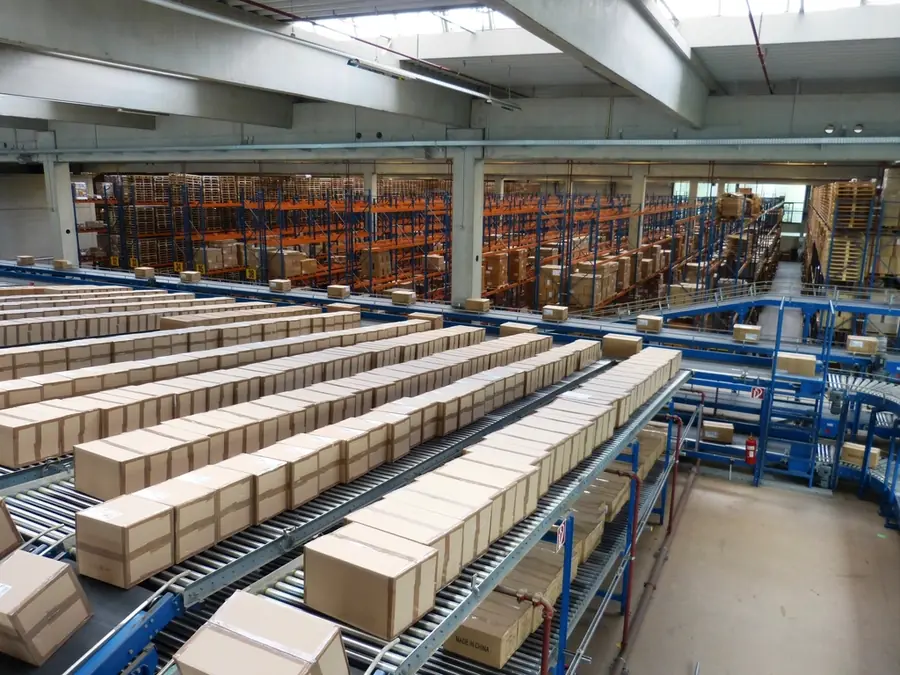
Nobody owns the seam between your prep center and your agency
Four places a split setup quietly costs you.
-
A label kills the shipment
Amazon refuses the inbound over an FNSKU. The warehouse says it printed what your file said. The agency says it never saw the file. You pay for the removal and the reship.
Costs youa removal order, freight both ways, and the days
-
Ads run on empty
The batch hasn't checked in yet, but the campaigns are live. You buy clicks for a listing that can't ship today. Nobody paused anything, because nobody was watching both screens.
Costs youad spend on a page that cannot ship
-
The bundle the listing never heard about
The floor makes a 2-pack. The detail page still sells singles. The returns come first, the suppression comes second.
Costs youreturns, a rating, then the listing itself
-
You are the seam
Nobody is dropping the handoff, because there is no handoff: Sunday goes to labeling, the campaigns wait until you are done, and the batch ships two days later than you meant. You are holding both ends of it.
Costs youa working day a week, and the launch date
One unit, from the container to the order
Set your batch size and walk the line. Every stop shows what happens to the unit, who owns that stop, and what it costs. Then flip the switch and watch the middle break.
Split between two vendors — the unit stops at node 07.
The floor
The account
01 Inbound receipt
Cartons arrive and get counted against your packing list, not against the invoice you were promised.
Owner in split mode: your prep centerOwner with one team: us — and the count is photographed.
02 Inspection
Every unit opened or checked: damage, counts, expiry dates, whether the manufacturer packaging survived the container.
Owner in split mode: your prep centerOwner with one team: us. A defect caught here becomes a listing note the same day, not a return next month.
03 FNSKU labeling
One barcode per unit, tied to your listing, placed where the scan gun at the fulfillment center expects to find it.
Owner in split mode: your prep centerOwner with one team: us — the same team that owns the listing it points at.
04 Poly bagging
Bagged where Amazon requires it, with the suffocation warning printed on any bag with an opening of 5 inches or more.
Owner in split mode: your prep centerOwner with one team: us. The bag spec is decided against the listing dimensions, not against a guess.
05 Bundling
Multipacks built, sealed and labeled as one sellable unit — not as two units in a bag.
Owner in split mode: your prep centerOwner with one team: us — and the listing is changed to match the same day.
06 Cartons and pallets
Cartons weighed, labeled and stacked to Amazon’s pallet spec, so receiving doesn’t hold them.
Owner in split mode: your prep centerOwner with one team: us. Carton counts go straight into the shipment plan at the next stop, with no file exchange in between.
07 Shipment plan
The shipment created in Seller Central, split across the fulfillment centers Amazon picks, carrier booked, labels back to the floor.
Owner in split mode: nobody. This is the seam.Owner with one team: us. The seam is closed.
08 Listing
Title, bullets and backend terms rewritten around the words buyers actually type, not the words on your packaging.
Owner in split mode: your agencyOwner with one team: us — with the stock on the floor in view.
09 A+ content
Modules built for the questions that stop people from buying this product.
Owner in split mode: your agencyOwner with one team: us. The modules answer the questions our own inspection keeps finding in the returns.
10 Campaigns
Sponsored Products and Brands structured around terms harvested from your own search term report.
Owner in split mode: your agencyOwner with one team: us — paused by us the day cover runs short.
11 Buy Box and account health
Price, stock cover and policy notifications watched daily, because any of the three can switch the listing off.
Owner in split mode: your agencyOwner with one team: us, with tomorrow's cover known from the floor rather than from a stale report.
12 The order
The unit ships. The next one has to already be on the line behind it.
Owner in split mode: your agencyOwner with one team: us, from the pallet to this point.
Your batch
Your number, not ours. A 200-unit carton and a 12-unit carton are not the same job.
Packing slip — estimate
Not a quote, and not our price list. The priced lines are published rates from another prep center, prepfba.com. Receiving, inspection and poly bagging have no published rate anywhere, so they carry no number here — which is exactly why the whole-job market band sits higher than the lines above it. Units per carton is your figure. Send us the batch and you get real numbers for your product.
Price my batchWhat happens to your boxes in the prep center
Every operation on this list exists to stop one specific failure. That is the only reason it is on the list.

-
Inbound count against your packing list
Stops: paying a supplier for units that never made it into the container.
-
Photos on receiving
Stops: the argument about what condition the goods were in when they arrived.
-
Unit inspection
Stops: a defect found by a customer instead of by us — at review-rating prices.
-
FNSKU labeling
Stops: a refused inbound and a removal order, because the barcode tied the unit to the wrong listing, or to no listing at all.
-
Poly bagging with the suffocation warning
Stops: destroyed units. A bag with a 5-inch opening and no warning does not pass receiving.
-
Bundling and multipacks
Stops: a detail page that sells a 2-pack while the warehouse ships singles.
-
Carton labeling and palletizing
Stops: an inbound sitting at receiving because a pallet is over height or a carton label is unreadable.
-
Shipment plan in Seller Central
Stops: the seam. In a split setup this is the stop that belongs to nobody, and it is the one that decides which fulfillment centers your batch is scattered across.


Prep is not packing. Packing is what happens after someone decided which of these eight your product needs.
What happens to your listing and your PPC while the boxes move
Four things we change in the account, what each one moves, and where you check it yourself.
-
Listing optimization — title, bullets, backend search terms, image sequence.
Moves Which searches your product shows up in at all.
Check Your search term report and your position for the twenty terms that matter.
-
A+ content and the brand store.
Moves How many of the people who land on the page buy.
Check Conversion rate in Business Reports, before and after the change.
-
Amazon PPC — Sponsored Products and Sponsored Brands, restructured around harvested search terms.
Moves What you pay for a sale, and which terms you can afford to own.
Check A weekly report with spend, orders, ACOS and TACOS in one table.
-
Stock cover, pricing and account health, watched daily.
Moves Whether the campaigns have anything to sell tomorrow.
Check Days of cover, IPI, and the policy notifications in your account.
This is the account management half — the agency work, done by the people who also touch the boxes. None of it is a secret method: it is a list of changes you can audit. Every one of them is dated in your account, and you can read the log without asking us for it.
In-house, two vendors, or one team. Pick one on purpose.
The same six responsibilities, and where each of them lands in three different setups.
| Responsibility | You do it yourself | An agency and a prep center | One team |
|---|---|---|---|
| Who applies the FNSKU | You | The warehouse | We do |
| Who creates the shipment plan | You | Whoever you asked last | We do |
| Who fixes a refused inbound | You | The two of them, over email, with you in the middle | We do |
| Who pauses the ads when stock runs out | You, if you catch it | Nobody agreed on this | We do |
| How many invoices | None, you pay in hours | Two | One |
| Who you write to when the listing gets suppressed at 9pm | Amazon support | Both of them, separately | One thread |
The first column is the right answer more often than agencies admit — we listed exactly when, in “When hiring us is the wrong call”.
Take both halves off my deskYour account, your inventory, your data stay yours
The line between what you keep and what we carry, written down before anything starts.
Yours
- Your Seller Central account and its credentials. We work from a user you create and can remove in two clicks.
- Your Brand Registry, your trademarks, your brand store.
- Your inventory, at every stop on the line. We hold it, we never own it.
- Your supplier relationships. We talk to your factory only if you ask us to.
- Your data. Every report, every search term file, every photo from receiving is yours to take with you.
Ours
- The operations on the floor: what gets counted, what gets photographed, what gets checked and what gets refused before it ships.
- The shipment plans we create in your account, and which fulfillment centers your batch ends up split across.
- The campaign structure we build, and the reasoning behind it.
- The fix when we get an operation wrong: we relabel, rebuild the shipment plan and rebook the carrier ourselves, and you get the new timeline the same day — not a thread between two vendors.
- The record: every batch photographed on receiving, every listing change dated, both readable by you without asking us.
When hiring us is the wrong call
Two lists. The second one is the honest reason most of this page won't apply to you.
Worth a conversation
- Packing and labeling your own units already eats a working day out of your week.
- Your ads and your warehouse are run by two parties who have never spoken to each other.
- You are moving a product into FBA and prep is the part you haven't solved.
- A refused inbound has already cost you a month of sales this year.
- You run a private label brand and you are the only person watching both the warehouse and the ad spend.
Don't hire us yet
- You pack a few dozen units in an evening and it doesn't bother you. A prep center will cost you more than it saves.
- You sell FBM only and you have no plan to change that.
- You want someone to guarantee a keyword position. Nobody controls that, and anyone who promises it is selling you a number they don't own.
- You are choosing on price per unit alone. A pure prep center will beat us on that line, and it should.
- You need a suspension appeal. That is a specialist job and it is not ours.
Questions Amazon sellers ask before the first batch
What does FBA prep cost?
Across the market it runs $0.40 to $2.00 per unit for the usual combination of inspection, FNSKU label and poly bag. Published per-operation price lists sit around $0.15 for a label, $0.40 for a labeled UPC, $1.00 for a bundle and $1.00 for carton forwarding. Your number depends on which of those your product actually needs — a sealed retail box needs a label and nothing else. Send the batch and we price the operations, not a package.
How fast does a batch move through prep?
Two to five days from inbound receipt to FC-ready cartons is what the market quotes, and it is a realistic window. Where your batch lands inside it depends on unit count and how many operations each unit needs. Bundling is what stretches it; a straight label-and-ship batch is at the fast end.
Do you need access to my Seller Central account?
Yes. You create a user with the permissions the work needs — listings, advertising, inbound shipments — and you can remove it in two clicks. We never ask for your login and we never register a brand in our own name.
What if I already have a prep center I'm happy with?
Then we take the account half and work to your warehouse's process and file formats. It works. But you stay the one holding the seam between them, and that is a trade worth making with open eyes rather than by default.
My inbound got refused over labeling. Can that be fixed?
Usually, and the path is fixed: a removal order back to a working address, the units relabeled correctly, a new shipment plan, a new carrier booking. The cost is the removal, the freight and the days. That is what node 03, FNSKU labeling, exists to prevent.
Do you guarantee a rank or a revenue number?
No. Rank is set by Amazon's algorithm and by what your competitors do this week, and neither is ours to promise. What we do commit to is that the work stays visible: every listing change logged, every campaign report readable in one table, every batch photographed on receiving.
Do you do the account side too, or just prep?
Both, and that is the whole point of this page. The account side is listing optimization — what most sellers call Amazon SEO — plus A+ content, Amazon PPC and stock cover. The floor side is FNSKU, poly bags, bundles and shipment plans. One team, one thread, one invoice.
What does account management cost?
Agencies in this market retain between $1,500 and $25,000 a month, and a seven-figure brand usually lands somewhere around $3,000 to $10,000. Those are published market figures, not ours. We quote after we look at the account, because the work in a listing with forty variations is not the work in a listing with two. What we do not do is bill a percentage of your revenue for a report.
Why does Amazon split my shipment across three warehouses?
Because inventory placement decides where your units go, and that decision is made at the moment the shipment plan is created — node 07 on the line above. In a split setup that is the stop nobody owns, which is why the answer usually arrives as a surprise and a freight bill.
How do we start?
Send the form below with your store link and the batch you have coming. We come back with the operations that batch actually needs, what they cost, and the one change we would make to the listing first.
Tell us what's coming and where it's stuck
One form, one thread. Describe the batch and the part of the account that is bothering you — that is enough to answer properly.
The person who answers this form is the same one who signs off your shipment plans. — Almazbek Urusaliev
- info@usgrowthseller.com
- Urusaliev@proton.me
- +1 820 200 5429
- Company details: Almazbek Urusaliev, Kyzart street 333, Bishkek 720083, Kyrgyzstan
Inbound goes to the floor, not to that address. You get the receiving address and the appointment window with the quote, before anything ships.